
If you are not familiar with sports betting, one of the first things that might confuse you is the odds themselves. You open an app, and you see numbers such as 1.80, 2.50, or even 3.20, but you do not know exactly what these numbers mean and how they affect your money.
However, the reality is that the odds themselves are not complicated when you grasp the underlying logic of their meaning. Moreover, the odds are the foundation of sports betting because they affect not only your potential earnings but also the chances of winning in the first place.
To put it in simple words, the odds mean two different things at once: the chances of an event occurring and the money you could make if you make the right guess.
What Do Odds Actually Mean?
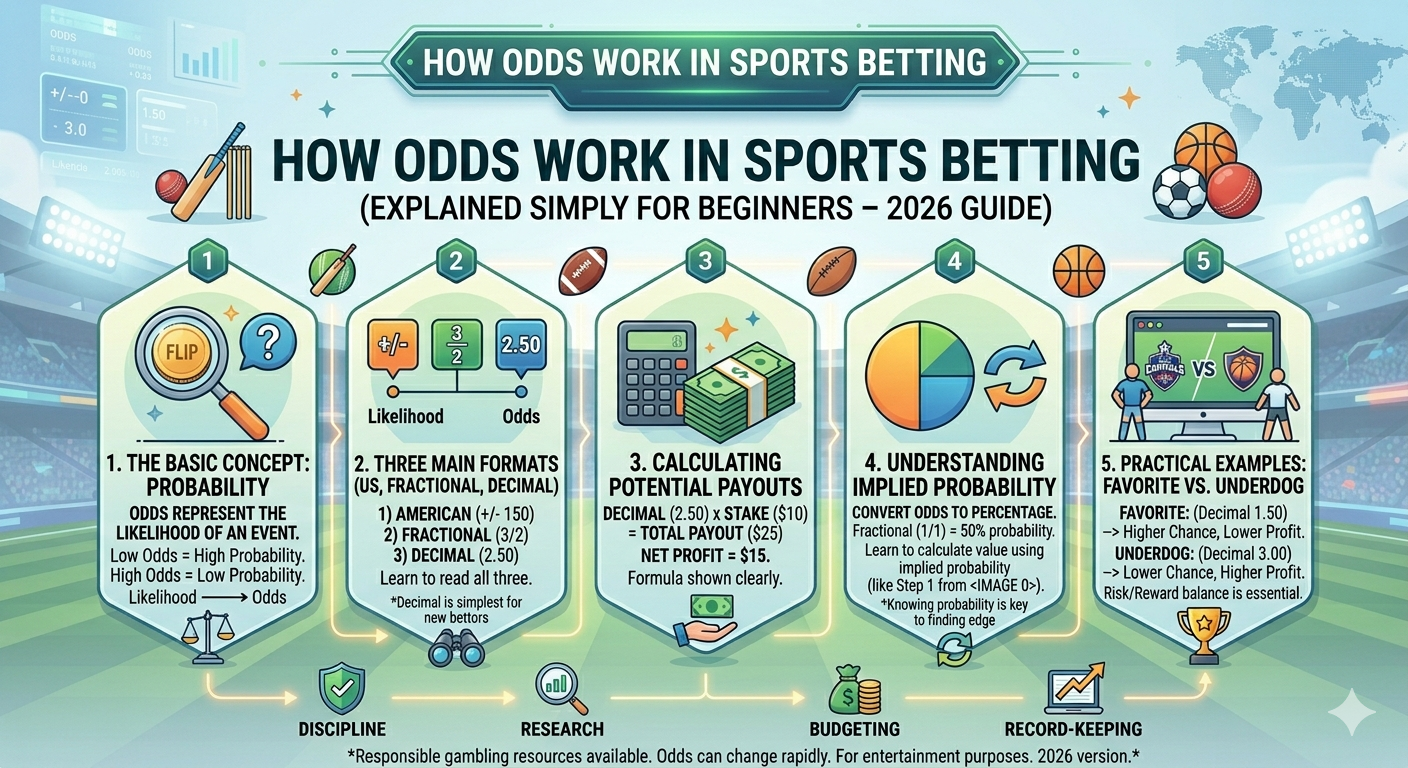
When you place a bet, the odds essentially let you know how much you can win on your stake. For instance, if you stake ₹100 on an event with 2.00 odds, you can win a total of ₹200. This includes your stake of ₹100, as well as your profit of ₹100.
At the same time, the odds also let you know the probability of an event occurring. For instance, lower odds essentially mean that the event is more likely to happen, whereas higher odds mean that the event is less likely to happen.
This is why 1.50 odds look “safe” but offer lower returns, whereas 3.00 odds look lucrative but involve higher risks.
Understanding the Most Common Type: Decimal Odds
In India, the most common type of betting is decimal odds. This is because it is easy to understand. You don’t need to perform any complex calculations. You simply need to multiply your bet with the odds.
For example, if your bet is ₹200, and your odds are 1.80, your total money will be ₹360. In this case, your profit is ₹160. This is an easy calculation, which is why decimal odds are considered suitable for beginners.
However, with time, you will realize certain things. Odds close to 1.50 are considered strong favorites, whereas odds above 2.50 are considered underdogs.
Favorite vs Underdog – The Basic Concept behind Odds
Every sports match is played by two teams, which could be either the favorite or the underdog. The favorite is the team that is likely to emerge victorious in the match, and it is associated with lower odds. The other team is known as the underdog, which is less likely to emerge victorious but is associated with higher odds.
For example, in the Indian Premier League, if there is a strong team like Mumbai Indians playing against a weaker team, then the odds for Mumbai Indians could be 1.60, while the odds for the other team could be 2.40.
This is not to say that the favorite is definitely going to emerge victorious in the match. It is simply that, according to the data that is available, they have more chances of winning.
Why Bookmakers Always Win in the Long Run
One important thing that you should be aware of is that bookmakers do not make any guesses. The odds that they make are such that they will always make money in the long run.
The way they do this is by adding a small amount to the odds. This means that even if the odds are fair, they will be slightly altered in favor of the bookmaker. This is why it is important that you do not place any blind bets.
This does not mean that it is impossible to win. It simply means that you have to be better than the average person.
Common Mistakes Beginners Make with Odds
One of the common mistakes beginners make is to think that low odds guarantee success. Just because the odds of a team are 1.40, it does not necessarily mean that it will win. There are many cases of upsets in such tournaments.
Another common mistake is to bet on teams with high odds. A bet with 4.00 or 5.00 odds is too enticing due to the potential money to be made. However, such bets are also low in probability.
Most beginners also do not consider probability and bet based purely on emotions.
How to Use Odds Smartly
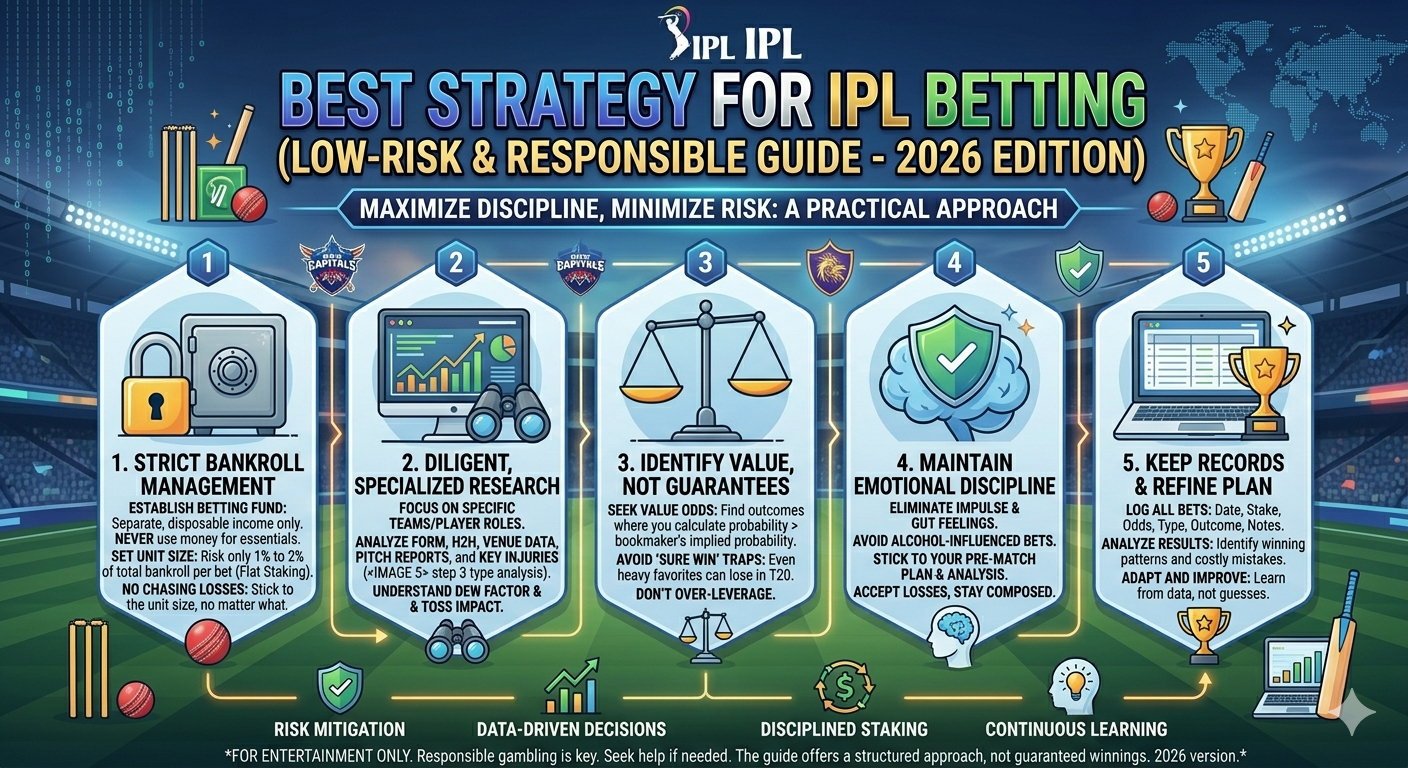
To make good use of odds, you need to accompany it with good analysis. This includes team form, pitch conditions, player form, among other conditions. The odds should be used in conjunction with your analysis.
Additionally, it is also essential that you bankroll your bets wisely. This is because even with good analysis, there is always room for failure.
As you progress with your bets, you will also develop an instinct for identifying good opportunities. This is usually developed with experience.
Reality Check: Odds Are Not Predictions
It is essential to comprehend that odds are neither a prediction nor a guarantee. Rather, they are an estimation of data, trends, and betting habits.
It is a fact that even the best teams lose, which is why discipline is key, rather than attempting to win every bet.
Final Thoughts
The first step in becoming a smart bettor is to learn the odds. Once you learn the odds and the way they relate to your profits, you will no longer be making blind bets. You will be making informed decisions.
The thing to do is to remain patient and avoid making emotional decisions. Betting is not about making money overnight; it’s about making better decisions.
When you approach it the right way, you will be making better decisions and avoiding the common pitfalls that most newbies fall into.